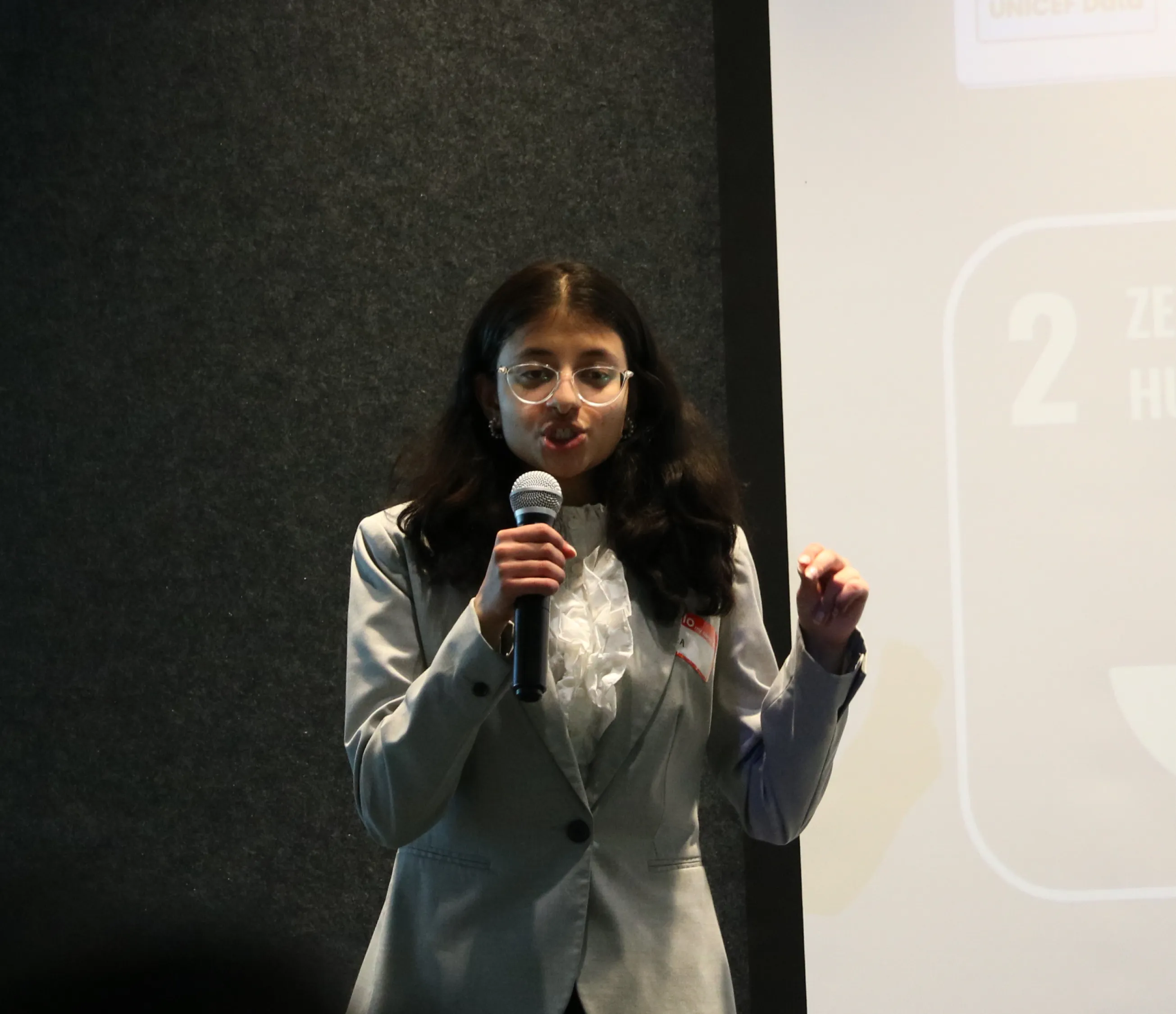
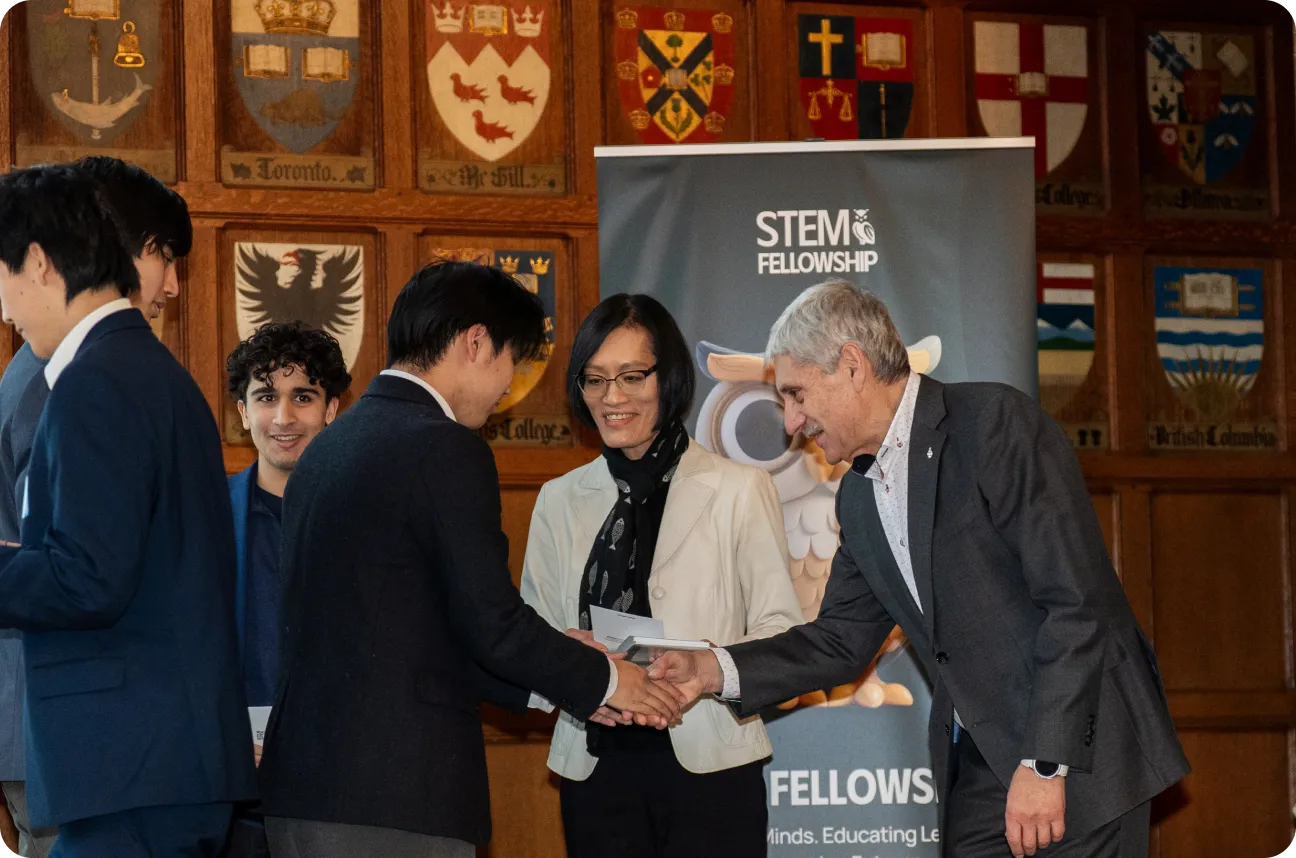
handshake to winner HSBDC
2026–2027 HSBDC Independent Research
Scholarly Viewpoint Challenge (SVC™)
Developed and offered by the STEM Fellowship Journal (SFJ) in partnership with Canadian Science Publishing (CSP), the Scholarly Viewpoint Challenge (SVC) gives students the opportunity to experience the full process of academic research, writing, feedback, competition, and potential publication
About the program
The Scholarly Viewpoint Challenge (SVC) is an academic research and writing program for senior high school, 1st-, and 2nd-year undergraduate students who explore a STEM topic of their choice, evaluate existing research and perspectives, and develop an evidence-based scholarly Viewpoint manuscript.
stem fellowship owl for hsbdc
Through research, analysis, academic writing, and feedback, participants strengthen critical thinking and scientific communication skills while creating tangible scholarly work they can add to their academic portfolio.

Students work closely with PhD and Master’s candidates, as well as senior researchers, to strengthen their research approach, argumentation, and scholarly writing.
WHO SHOULD APPLY
SVC is designed for high school and university students who want to go beyond traditional classroom assignments and gain practical experience with research and scholarly communication. The program is especially well suited for students who:
Colorful cartoon owl with large eyes and one raised wing.
master scholarly tools
Want to explore the world of scholarly journals, ORCID IDs, and impact factors 
aim to publish
Are interested in academic research, scientific writing, and the scholarly publication process.
value critical analysis
Want experience evaluating scholarly literature and developing evidence-based arguments
target STEM careers
Are preparing for research assistantships, summer research opportunities, graduate study, or future research and STEM careers 
sharpen core skills
Want to strengthen critical thinking, academic writing, and scientific communication skills
build academic portfolio
Want to create tangible scholarly work they can include in their academic portfolio
seek STEM mentorship
Want to connect with fellow undergraduate researchers, graduate mentors, and members of the broader STEM academic community 
WHAT YOU WILL LEARN
By participating in SVC, students work through the major stages of developing scholarly work.
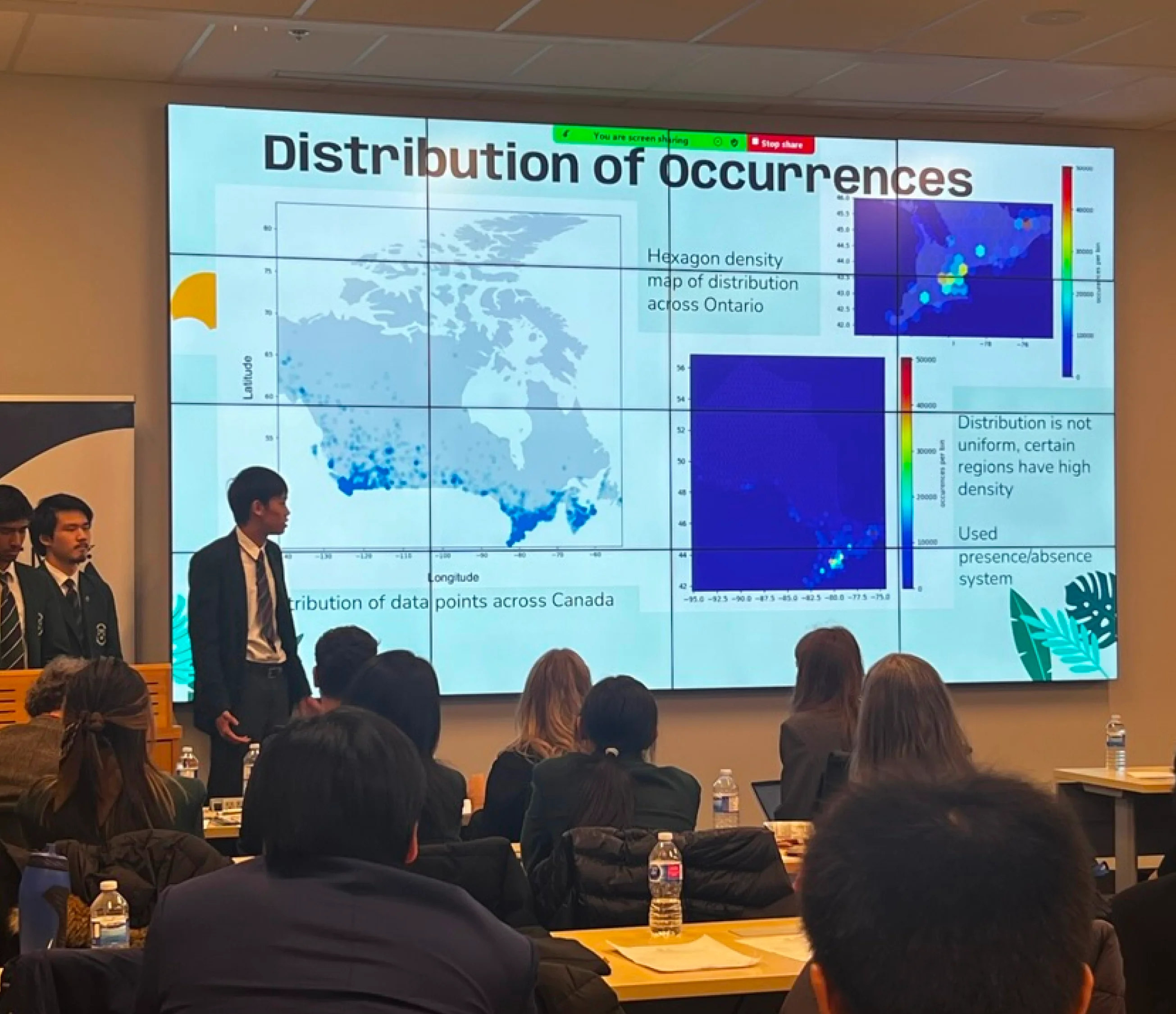
Preserving Biodiversity and Advancing Land’s Environmental Resilience Using Open Data, Satellite Intelligence and AI
COMPETITION, PUBLICATION & AWARDS 
SVC gives students the opportunity to develop their scholarly work for competition and a broader academic audience.

Participants may submit their completed scholarly Viewpoint to the STEM Fellowship Journal (SFJ) for consideration. Submission does not guarantee publication; manuscripts must meet the journal’s editorial and peer-review requirements.

Top Scholarly Viewpoint Challenge submissions may also be recognized with awards and publication-related benefits, including publication fee waivers or discounts where applicable.
*2027 awards and publication-related benefits will be announced separately
The STEM Fellowship Journal
An open-access, peer-reviewed academic journal that provides emerging researchers with a pathway to develop formal, citable scholarly work and begin building an academic publication record
3000+
students
350+
publications
More About SFJ
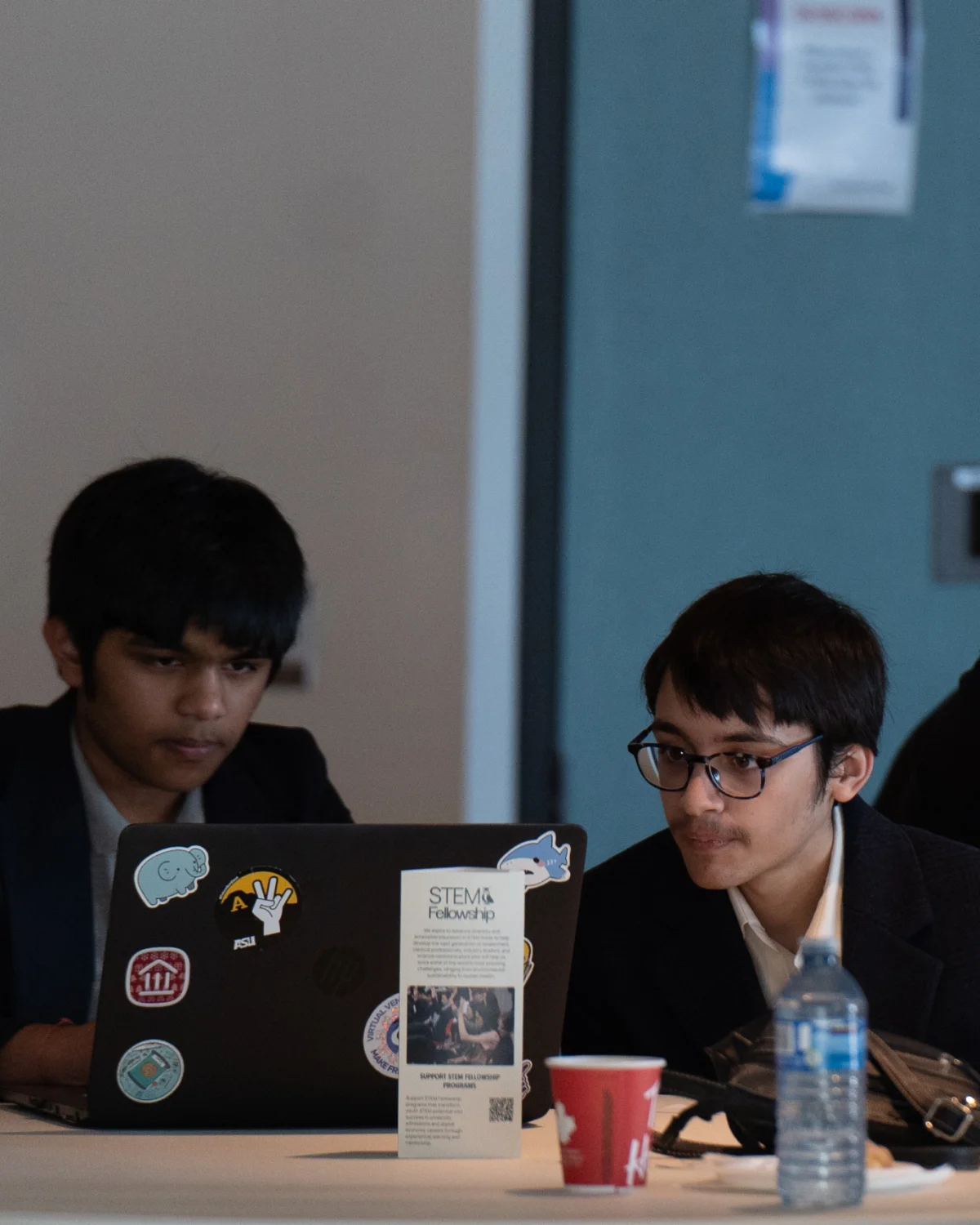
student works on the project HSBDC
PROGRAM DETAILS
It includes:
Program Date: July–August 2027
Registration Opens: To be announced
Registration Deadline: To be announced
Format: 100% online (combination of synchronous workshops and self-paced writing/mentorship)
Eligibility: senior high school, 1st- and 2nd-year undergraduate students across STEM, health, data science, and engineering disciplines
Language: English, with bilingual resources available through participating chapters
Program Output: Formal scholarly Viewpoint manuscript suitable for an academic portfolio and submission for publication consideration
Awards: To be announced
2027 Publication Benefits: To be announced
$35
per participant
Registration Soon
*All prices are in Canadian dollars
How does the program work?
SVC guides students from an initial STEM question to a developed scholarly Viewpoint
1. Explore
Choose a STEM topic or issue that you genuinely want to investigate.
2. research
Review scholarly literature, identify relevant evidence, and examine different perspectives surrounding your topic.
3. Analyze
Evaluate the strength of existing evidence, identify important questions or gaps, and determine the position you want to develop.
4. Write
Turn your research and analysis into a structured scholarly Viewpoint manuscript.
5. Receive Feedback
Share your work for constructive feedback and learn how academic writing improves through review and revision.
6. Revise
Strengthen your argument, supporting evidence, organization, citations, and scholarly communication.
7. Compete
Prepare your completed work for the Scholarly Viewpoint Challenge competition.
8. Pursue Publication
Completed Viewpoint manuscripts may be submitted to the STEM Fellowship Journal for consideration, subject to the journal’s editorial and peer-review requirements.
Frequently Asked Questions
1. What mentorship and academic support will I receive?
Students receive structured academic support throughout the research and writing process to help them develop their scholarly work with greater confidence and rigor.Program support includes:
‍
• Interactive academic writing workshops
• Research and scientific communication instruction
• Self-paced learning resources
• Guidance on developing focused research questions
• Support with evaluating evidence and strengthening argumentation
• Feedback on scholarly writing and manuscript structure
• Peer review and revision activities
• Direct guidance from PhD and Master’s candidates, as well as senior researchers
• Support in preparing work for competition and potential publication

Mentors help students refine their research approach, strengthen their reasoning and argumentation, improve scholarly writing, and prepare their Viewpoint manuscript for final submission.
2. Do I need to conduct laboratory research?
No. SVC focuses on developing a scholarly Viewpoint through research, evidence analysis, critical thinking, and academic writing. Students investigate existing scholarly research rather than being required to conduct an original laboratory experiment. 
3. Can I choose my own STEM topic?
Yes. Students are encouraged to explore a STEM topic or question that genuinely interests them, provided it fits within the scope and requirements of the challenge.
4. Do I need previous research experience?
No previous academic research experience is required. The program is designed to help early undergraduate students develop research, evidence-analysis, scholarly writing, and scientific communication skills.
5. Will I receive feedback on my work?
Yes. Feedback and revision are core parts of the SVC experience. Students receive guidance throughout the research and writing process from mentors, peers, and reviewers to strengthen their argumentation, evidence, structure, and scholarly writing.
6. Will my paper be published?
Participation does not guarantee publication. Students may have the opportunity to submit their completed scholarly Viewpoint to the STEM Fellowship Journal for consideration. All submissions must meet the journal’s editorial and peer-review requirements.
What Students Say
2023
Vat Photopolymerization of Native Extracellular Matrix and Patient-Derived iPSC Recellularization for Personalized 4D Bioprinting
Jason Chu
2023
Advantages of Shape Memory Alloys over Conventional Actuators and Alternative Intelligent Materials For Aerospace Applications
Adam Ben Lassoued
2023
Nanotechnology for Improved Osteoporosis Treatment and Fracture Recovery
Claire Jiaqi Li
2023
The Potential of Deep Learning in Monitoring Neurological Disorders
Vicky Nguyen
2022
Advantages of Red Light-Operated Optogenetic Tools in Neuroscience
Dhanya Saravanan
2022
The Habitable Zone Should Be Redefined
Simone Lilavois
2022
Leveraging Ensemble Loss Landscape Traversals to Ameliorate Knowledge Distillation
Aditya Dewan
2022
Skills Over Pills: Evaluating the Effectivity of Pharmacotherapeutic and Psychosocial Treatments of Patients with Schizophrenia
Victoria Mnatsakanyan
2021
Ending the organ shortage crisis: Encapsulations of induced pluripotent stem cells (iPSCs) vascularized by 3D bioprinted endothelium (SWIFT)
Bodhana Sivagurunathan
2021
The FRESH Method of Bioprinting the Heart for Transplantation
Sophia Yang
2021
Pyrolysis: A waste to energy conversion method to reduce environmental hazards of single-use COVID-19 face masks
Janani Anandan
2021
Comparing the Safety of Proteolysis Targeting Chimeras (PROTACs) and Small Molecule Inhibitors (SMIs) in Treating Cancer
Subin Jeon
2021
ELASA: Aptamers as a Replacement of Antibodies in ELISA
Yimeng Liu
2021
The Effective Use of Optogenetic Therapy as a Universal Approach to Vision Restoration
Ryan Ugovsek
2020
Gaining the Upper Hand On COVID-19 Misinformation
Alex Cen
2020
Revolutionizing Treatment of High-Grade Gliomas Through the Use of 5-Aminolevulinic Acid Fluorescence Guided Surgery
Hana Mirbagheri
2020
Evaluation of Herd Immunity as a Defense Against SARS-CoV-2
Taehyun Yim
2020
Sex and Age Impact Prevalence and Symptoms of Vasovagal Syncope: Implications for Accurate Diagnosis
Hailey Gregson
2020
Improving Diagnosis for Disorders of Consciousness: the case for a novel multi-paradigm approach
Yi An Wang
2020
Artificial Neural Networks on Recruiting Athletes
Tales Scopinho
What Students Say
I increased my confidence
Participating in the HSBDC program was an exciting and valuable experience. I developed my data analysis and problem-solving skills while working on a real-world challenge. The program helped me understand how data and artificial intelligence can be used to address important issues, and it increased my confidence in pursuing a future in STEM.
Vivaan
Grade 12, Joyce Public School
This experience improved my skills
The HSBDC program gave me the opportunity to work with other students, exchange ideas, and learn from experienced mentors. I especially enjoyed turning data into meaningful insights and presenting our solution as a team. This experience improved my communication, collaboration, and technical skills.
Priya
Grade 11, Ancaster Public School
The experience was inspiring!
Before joining the HSBDC program, I had limited experience with data science and AI. Through the challenge, I learned how to analyze information, think critically, and develop creative solutions to real-world problems. The experience was inspiring and showed me that STEM can be both challenging and rewarding.
Thomas
Grade 11, Runnymede Collegiate Institute
Questions?
We've got answers!