Publish Your Research. Build Your Scholarly Record.
STEM Fellowship Journal
Publish peer-reviewed scholarly work
Receive a permanent DOI for published papers
Build a citable research portfolio
Gain experience with academic peer review
Share your research with a broader scholarly audience
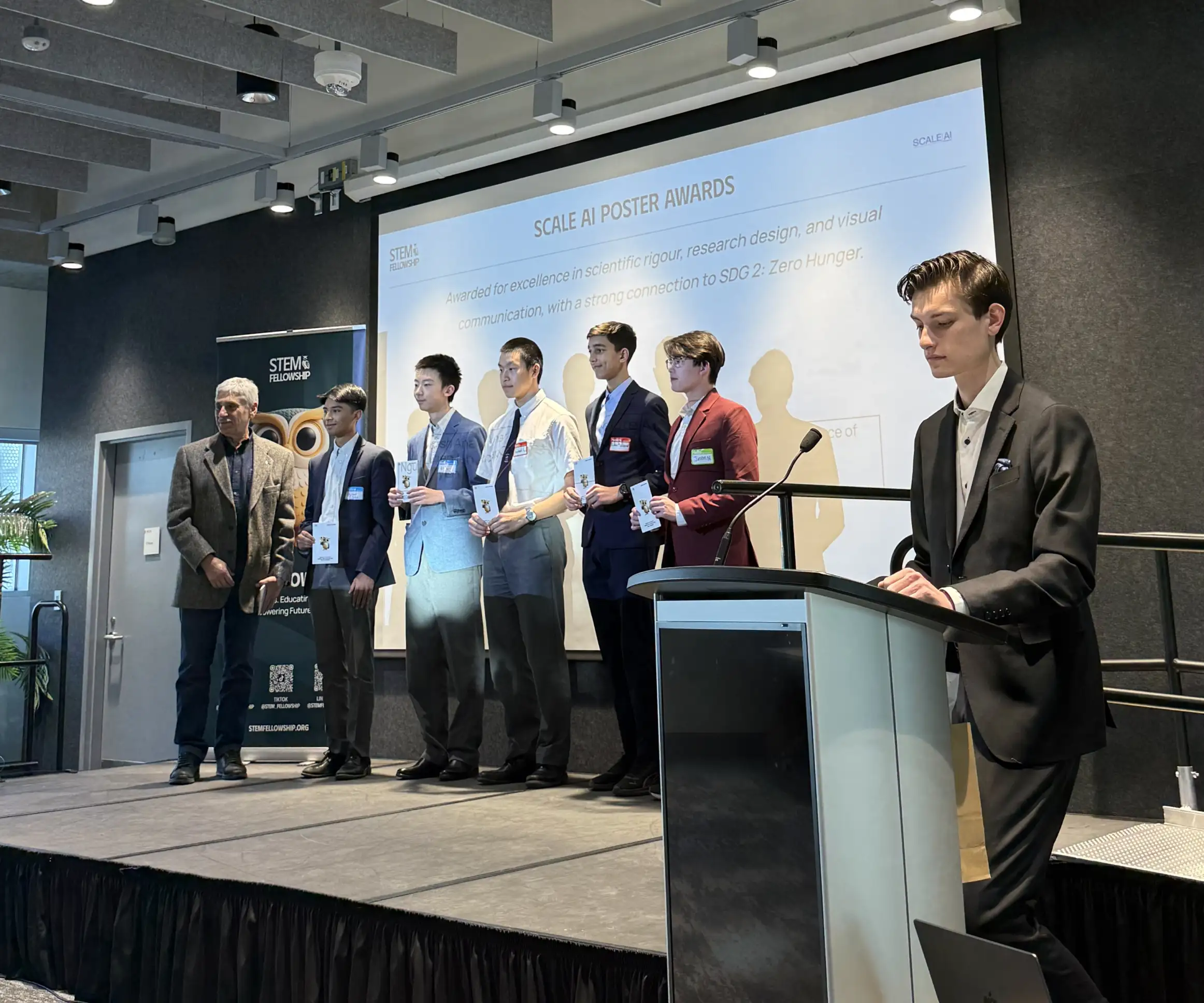
handshake to winner HSBDC
The STEM Fellowship Journal (SFJ), published in partnership with Canadian Science Publishing, provides a platform for high school, undergraduate, and graduate students to publish peer-reviewed research, share their ideas, and build a lasting scholarly record. SFJ publishes two issues per year.
Open Access
CC BY 4.0
Supported by
Canadian Science Publishing
Rigorous Peer Review
Student Editorial Board + Expert Review
For Emerging Researchers
High School, Undergraduate, Graduate
What Is the STEM Fellowship Journal?
3000+
students
350+
publications
42%
High school students
58%
university students
The STEM Fellowship Journal (SFJ) ISSN: 2369-0399, established in 2015 and published in partnership with Canadian Science Publishing (CSP), Canada’s largest scholarly publisher, serves as an academic engine that transforms early-stage student research into formal, citable scholarly work. As the only CSP-published journal dedicated specifically to supporting emerging researchers in high school and university, SFJ combines open-access publishing with a three-phase review process while helping high school, undergraduate, and graduate students gain experience in academic writing, peer review, scientific communication, and scholarly publication.
Expert Review and DOIs
Manuscripts are reviewed by qualified subject-matter experts, including PhD- and MD-level reviewers. Published papers are digitally archived and receive permanent Digital Object Identifiers (DOIs), giving students a lasting, citable scholarly record they can include in their research portfolio.
Student Editorial Community
SFJ operates online with an editorial community across Canadian university campuses, including managing editors, student editors, associate editors, copy editors, layout editors, and external subject-matter reviewers.
Fellowship Research Pathway
SFJ also provides a publication pathway for research developed through STEM Fellowship programs, including HSBDC, IUBDC, and the Scholarly Writing Internship. Research does not need to originate from a STEM Fellowship program to be submitted.
What Makes SFJ Different
Open-Access Publishing
SFJ publishes articles under the Creative Commons Attribution 4.0 International License (CC BY 4.0), making research freely accessible and reusable with appropriate attribution. Published articles are preserved through Canadian Science Publishing’s partnerships with CLOCKSS and Portico.
Rigorous Multi-Stage Review
Submissions undergo editorial screening by the Student Editorial Board followed by blind external peer review by an expert in the relevant field. Authors may be asked to revise their manuscripts before final editorial approval, copy editing, and typesetting.
Focused on Emerging Researchers
SFJ provides an accessible pathway into academic publishing while maintaining established editorial, peer-review, research ethics, and publication standards.
Editorial Independence and Research Integrity
SFJ maintains editorial independence in selecting and processing manuscripts. Through Canadian Science Publishing, the journal follows COPE core practices and uses COPE guidance when addressing publication ethics and alleged misconduct.
students are on the conference hsbdc
Who Can Submit?
SFJ welcomes high school, undergraduate, and graduate researchers from Canada and internationally. Manuscripts may be submitted by individual authors or research teams, with or without mentor involvement.
Research is accepted across all areas of Science, Technology, Engineering, and Math (STEM) and does not need to originate from a STEM Fellowship program.
Value for Students, Families, and Partners
High School Students & Parents
Value
Demonstrates initiative, research ability, and academic engagement for university applications and research portfolios
What They Gain
A peer-reviewed publication with a permanent DOI that can be cited and shared
Undergraduate Students
Value
Builds a scholarly publication record that can strengthen applications for graduate study, research opportunities, and lab placements
What They Gain
First-author or co-author experience in a peer-reviewed academic journal
Academic Institutions & Sponsors
Value
Provides visible evidence of student research, mentorship, and program outcomes
What They Gain
Published proceedings, student research outputs, and measurable scholarly participation
What We Publish
Original Investigations
Original student-led research that includes experimental data or collected information and reports novel results. Research may be completed with or without mentor support
Review Articles
Detailed critical reviews of a specific area of study based on existing literature, including meaningful synthesis.
Viewpoint Articles
Focused, well-informed perspectives on important or controversial topics within STEM fields, providing a clear point of view or direction.
Conference Proceedings
Abstracts from conference presentations, posters, and seminars.
How Publication Works
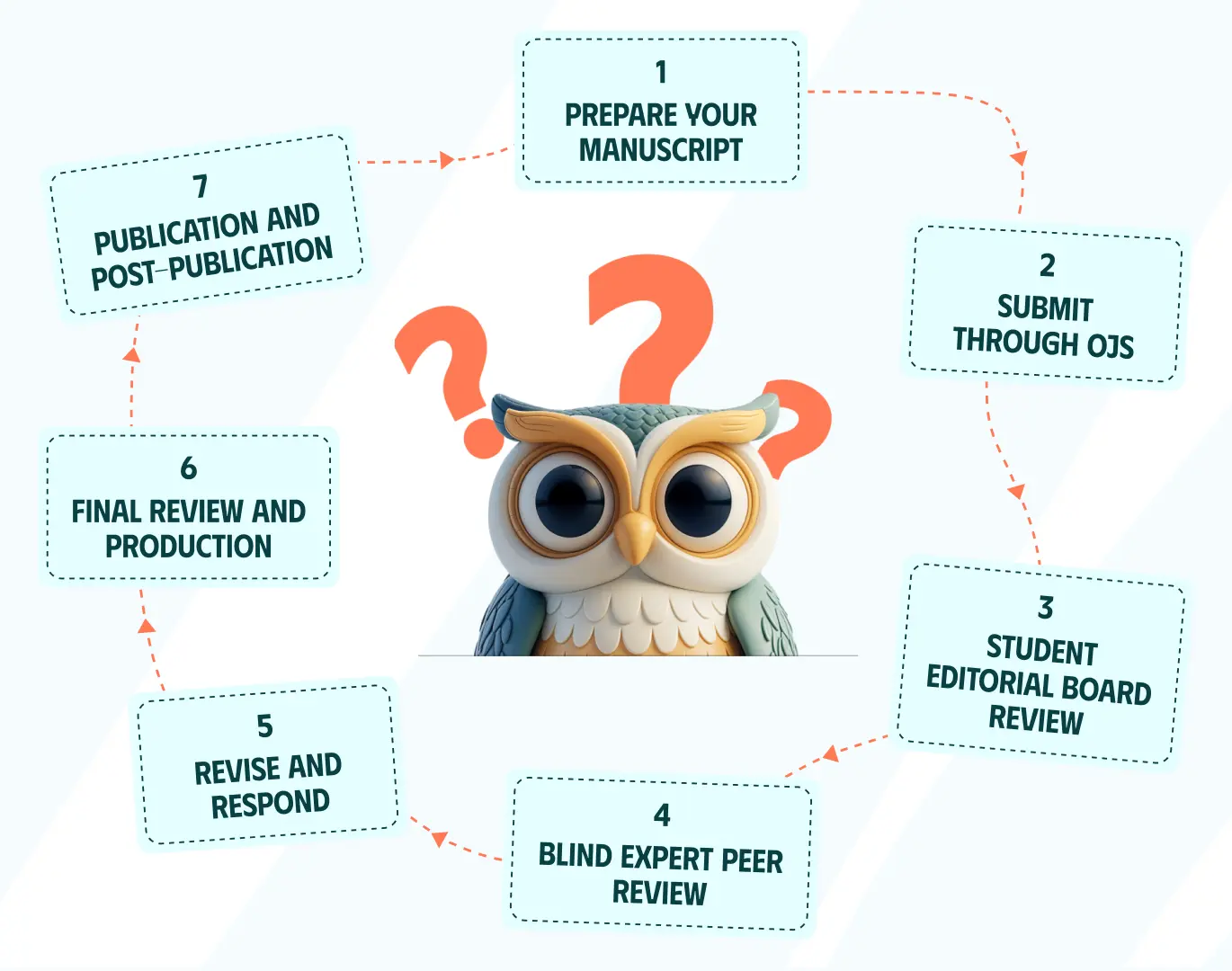
1. Prepare Your Manuscript
Follow SFJ manuscript guidelines and use the required templates.
Prepare Your Manuscript
2. Submit Through OJS
Create a free Open Journal Systems account and submit your manuscript and required supporting materials.
Submission Guidelines
3. Student Editorial Board Review
A Student Editorial Board member evaluates the manuscript and may request revisions before recommending it for peer review.
4. Blind Expert Peer Review
An expert in the research field reviews the manuscript and may recommend additional revisions. 
Peer Review Policies
5. Revise and Respond
Authors address editorial and reviewer comments and submit revised versions as needed.
6. Final Review and Production
Approved manuscripts undergo copy editing, typesetting, and final editorial approval.
7. Publication and Post-Publication
Publication-ready manuscripts are posted as preprints and subsequently included in a final SFJ issue. Final issues are released twice annually.
Post-Publication Resources
students are on the conference hsbdc
Author Support 
Academic publishing can be unfamiliar to first-time researchers. SFJ provides guidance and resources to help authors prepare manuscripts and navigate the publication process.
Author resources include:
Manuscript guidelines
Article templates
Overleaf / LaTeX template
Science communication resources
OJS submission guidance
Editorial and peer-review policies
Author resources include:
There is no fee to submit a manuscript. A $400 CAD open-access publication fee is charged only after a manuscript successfully completes peer review and is accepted for publication.
$400
publication fee
*All prices are in Canadian dollars
Ready to Publish Your Research?
Review the author guidelines and begin preparing your manuscript
Published Student Research
Canadian Science Publishing
Volume 11, 2025
Canadian Science Publishing
Volume 10, 2024
Canadian Science Publishing
Volume 9, 2023
Canadian Science Publishing
Volume 8, Issue 2, 2022
Canadian Science Publishing
Volume 8, Issue 1, 2022
Canadian Science Publishing
Volume 7, Issue 2,  2021
Canadian Science Publishing
Volume 7, Issue 1,  2021
Canadian Science Publishing
Volume 6, 2020
Canadian Science Publishing
Volume 5, 2019
Canadian Science Publishing
Volume 4, 2018
Canadian Science Publishing
Volume 3, Issue 2, 2017
Canadian Science Publishing
Volume 3, Issue 1, 2017
Canadian Science Publishing
Volume 2, 2016
Canadian Science Publishing
Volume 1, Issue 2, 2015
Canadian Science Publishing
Volume 1, Issue 1, 2015
Questions
about publication?