
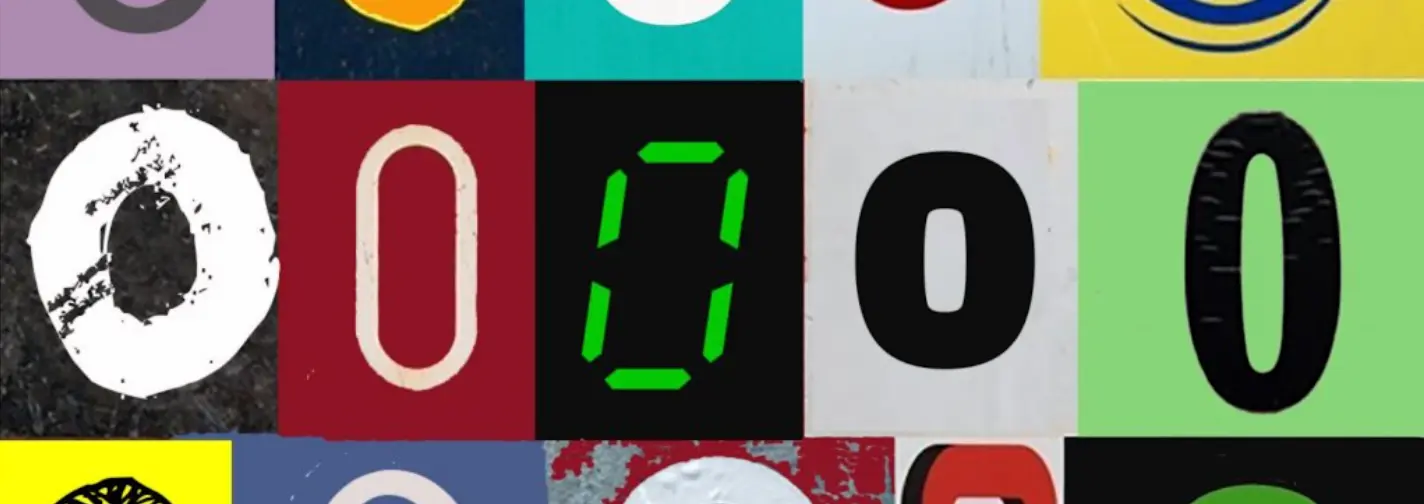
There's a lot of ambiguity that revolves around this number, and some argue it's not even a number. Therefore, it often becomes an interesting discussion for us to explore.
Firstly, it is worth the time to define a number: Numbers are a set of entities that can be combined (according to agreed rules) by the operations of addition, subtraction, multiplication, division, etc to produce answers that are in the set.
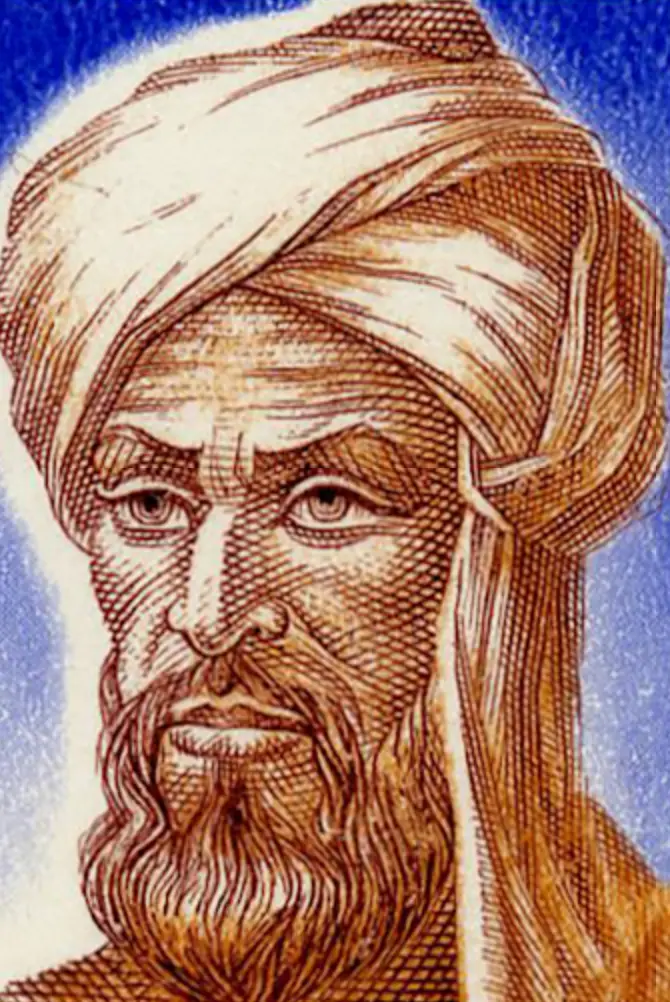
Additionally, there's some history involved in the discovery of zero: In the early 9th century, the Persian mathematician Muhammad in Musa Al-Khwarizmi earned the title of "the Father of Algebra" due to his discoveries that allowed him to speed up mathematical calculations over the millennia[2]. He was deeply intrigued by the Hindu system from India that used only 9 digits. To keep from having to use more and more symbols for larger numbers, he developed a place system[1]: The value of a number could be determined by its place in a row of numbers. There was a row for 1s, a row of 10s, 100s, 1000s... Instead of the 'nothingness' from the Hindu system, it became a placeholder to help us keep our set of number systems coherent and cohesive.
"The tenth figure in the shape of a circle," Al-Khwarizmi wrote, "would prevent the confusion between 1 and 10 among merchants". If no numeral fell in a particular column, the circle occupied the place "to keep the rows straight"[1]. You can start counting without the use of zero, and you will realize why it is a number. And so did Al-Khwarizmi. He further studied ancient mathematical books and even began to consider the existence of negative numbers when subtracting a larger value from a smaller one. But, there was a missing piece of the puzzle that bugged him.
Take a problem like the following: 3 - 4 = —. We know it is -1, yet Al-Khwarizmi couldn't arrive at that conclusion when he counted 4 units backwards from 3. It went 2, 1, -1, -2, so the fourth number was - 2, which was faulty[2].
This was a moment of realization that solved a mystery that sped up future mathematical calculations and opened the door to the correctness of negatives and many other disciplines of study! Zero is a number, even if it signifies 'nothingness'. This was the missing piece, and like that, Al-Kwarizmi solved the mystery. Zero was upgraded from a placeholder to a full-fledged numeral sitting right between -1 and 1. In addition, without the zero, adding x to -x is suddenly undefined, and we lose the beauty of our set structure. That helps us arrive at the discovery of zero, a number, and the beginning of all numbers! [1]
In present mathematics, we are warned to not break one rule, as it causes much trouble: we cannot divide by this simple mysterious number, zero. But, why?
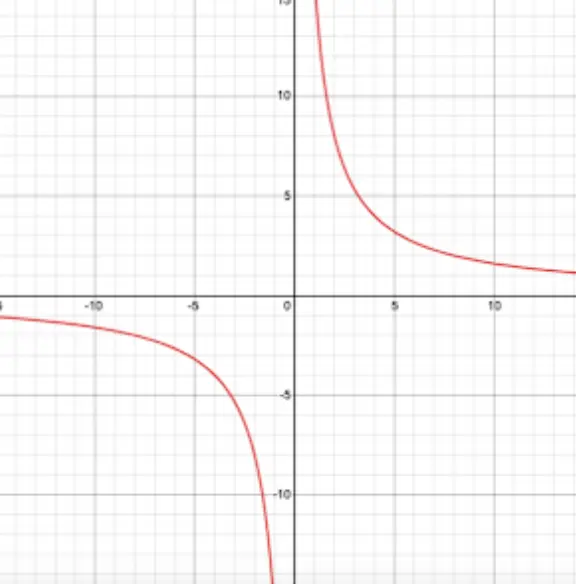
-Dividing by a smaller and smaller number gives us a greater number till infinity. For example, 16÷4 = 4, 16÷1 = 16, 16÷0.5 = 32... As your divisor gets larger, the quotient shrinks exponentially and infinitely. This is shown by the following graph of 16÷x:
Does that mean that a number divided by zero gives us infinity (not a number)? As we divide our dividend by a divisor that approaches zero, we get a number that approaches infinity. However, that doesn't mean that 16/0 = ∞.
We need to first understand that division is how many times the divisor is added to get the dividend.
For example, 16÷2 means how many times we add 4 to get 16. In other words, "2 times what gives us 16"? In a valid division equation, we should be able to multiply the quotient (the answer) by the divisor to get the dividend again and go back to where we started. For example, in 16÷8 = 2, the quotient (2) when multiplied by the divisor (8) gives us the dividend (16). This is true because division undoes multiplication, and this makes it a true statement.

In addition, if we divide a number by its reciprocal (1 divided by that number), we would always get 1. For example,
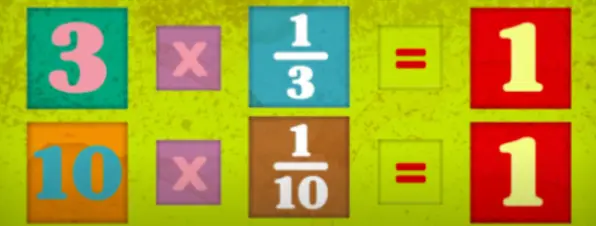
However, this is not the case with O because all numbers multiplied by zero would give us 0, not 1. This means that zero has no reciprocal.
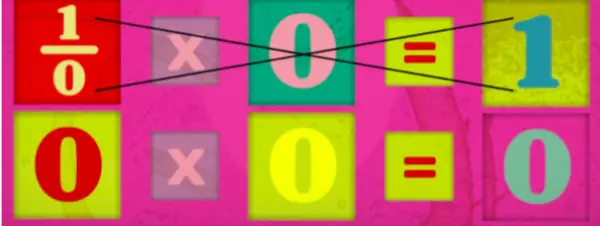
Let's take a second look at this equation: 16/0 = ∞. I previously stated that infinity not a number. But let's explore the proof behind that!
First, let's test whether infinity is the reciprocal of 0 (. = 10) pretending we don't know any characteristics of o. This means that: O x ∞ = 1. Recall that a number multiplied by its reciprocal is 1.

Now, let's put that into an algebraic equation, where each term is equal to 1, and that would give us a sum of 2.

We could rearrange that into (0 + O) × (2∞) = 2, which we could further arrange into 0 x ∞ = 2, but we previously stated that 0 x ∞ = 1 because we assumed that 0 and ∞ are reciprocals.

This suggests that 1 = 2, which is contradictory to our understanding of numbers. This doesn't make it a useful or intuitive assumption.
[1]Uncle John's Bathroom Reader. The story of zero [Internet]. Today I Found Out. 2015 [cited 2022 Apr 9]. Available from: http://www.todayifoundout.com/index.php/2015/09/the-story-of-zero/
[2] Brezina C. Al-Khwarizmi: The inventor of algebra. Rosen Central; 2006 Available from: https://books.google.ca/books?hl=en&|r=|ang_en&id=3Sfrхde0СХIC&0i=fnd&pg=РА6&dq=aI-khwarizmi+zеro&ots=|7D1Drsxгs&sig=ОBWxqNqyNpqх4DnPHХYoKb6sc-s&redir_esc=y#v=onepage&q=al-khwarizmi%20zero&f=false
[3]How do you prove that zero is a number? [Internet]. Quora. [cited 2022 Apr 9]. Available from: https://www.quora.com/How-do-you-prove-that-zero-is-a-numbe
[4] TED-Ed. Why can't you divide by zero? - TED-Ed [Internet]. Youtube; 2018 [cited 2022 Apr 9]. Available from: https://www.youtube.com/watch?v=NKmGVE85GUU





.svg)
.svg)
.svg)
.svg)

