




.svg)






Equitable Health Technologies: Overcoming Biases and False Inferences in AI Diagnostics and Drug Discovery

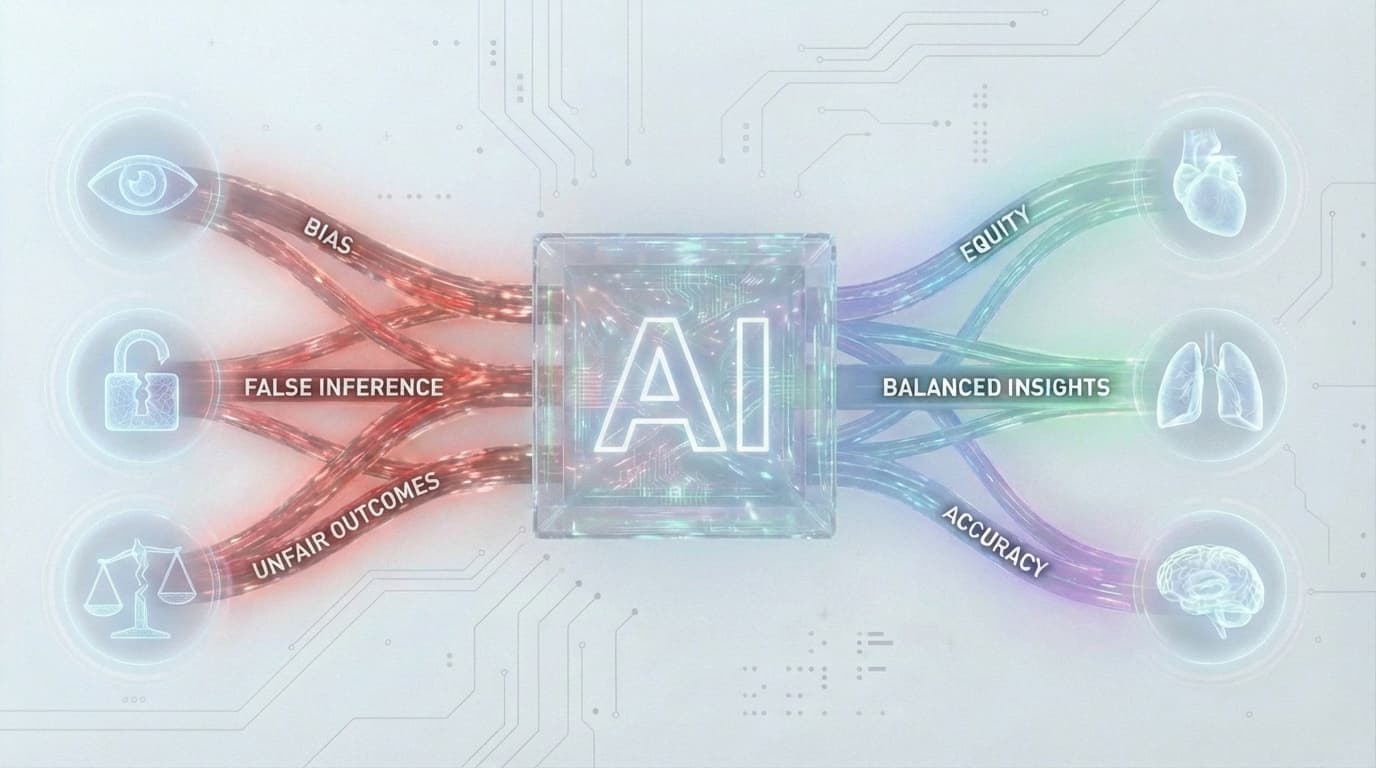
As AI transforms healthcare, ensuring reliability is critical. However, systems learning from existing data often reflect gaps or inconsistencies, leading to false inferences, diagnostic errors, and unequal performance across patient groups.
Open Data is pivotal for transparency and accountability. Biases emerging from unrepresentative datasets or flawed assumptions can perpetuate health disparities.
Leveraging public data on genomics, clinical trials, and social determinants allows researchers to audit and mitigate these risks effectively.
Open Data is pivotal for transparency and accountability. Biases emerging from unrepresentative datasets or flawed assumptions can perpetuate health disparities.
Leveraging public data on genomics, clinical trials, and social determinants allows researchers to audit and mitigate these risks effectively.
We task undergraduate and graduate students to harness data science to:
• Detect, reduce, and prevent bias in diagnostics and drug discovery;
• Develop data-driven tools that increase fairness and inclusivity;
• Innovate bias-aware model evaluation techniques to build trustworthy AI systems.
• Detect, reduce, and prevent bias in diagnostics and drug discovery;
• Develop data-driven tools that increase fairness and inclusivity;
• Innovate bias-aware model evaluation techniques to build trustworthy AI systems.







.svg)
.svg)
.svg)
.svg)

